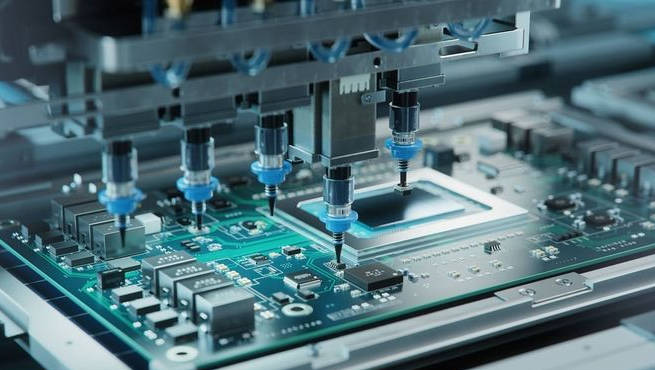
The fundamental difference between Aluminum PCBs and traditional PCBs (like FR-4) lies in their core material and resulting thermal performance. Aluminum PCBs, also known as Metal Core PCBs (MCPCBs), utilize a metal base to dissipate heat rapidly, making them ideal for high-power applications like LEDs and power converters. In contrast, traditional PCBs use a non-conductive fiberglass substrate (FR-4), offering a cost-effective and versatile solution for the vast majority of standard electronics where extreme heat is not a primary concern. This core distinction influences every aspect of their design, from durability and performance to overall project cost.
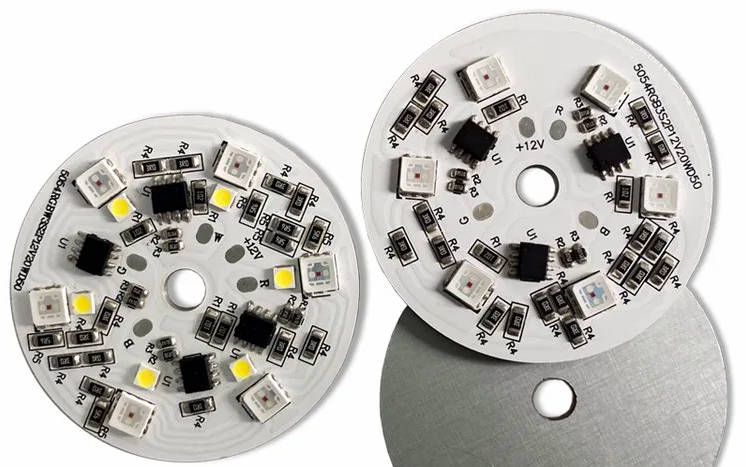
Table of Contents
- What is a Traditional (FR-4) PCB?
- What is an Aluminum PCB (Metal Core PCB)?
- Head-to-Head Comparison: Aluminum PCB vs. FR-4
- The Critical Question of Cost: Is an Aluminum PCB Worth the Investment?
- Which PCB is Right for Your Application?
- Conclusion: Making the Informed Choice for Your Project
- Frequently Asked Questions (FAQ)
What is a Traditional (FR-4) PCB?
When engineers and hobbyists refer to a “traditional” or “standard” printed circuit board, they are almost always talking about an FR-4 PCB. The term FR-4 stands for “Flame Retardant 4,” which is a NEMA-grade designation for glass-reinforced epoxy laminate material. This material has become the industry’s workhorse due to its excellent balance of cost, mechanical strength, electrical insulation properties, and manufacturability.
The Core Composition of FR-4
The structure of an FR-4 board is a composite. It consists of woven fiberglass cloth layers impregnated with an epoxy resin binder. This substrate acts as an insulator and provides the physical structure for the board. Thin layers of copper foil are then laminated to one or both sides of this FR-4 core. The circuit patterns are etched into this copper, creating the conductive pathways that connect electronic components. For multi-layer boards, several layers of FR-4 and copper are pressed and bonded together, with “vias” drilled to connect the different layers.
Strengths and Common Applications
The overwhelming popularity of FR-4 is not accidental. Its primary strength is its cost-effectiveness and immense versatility. The material is inexpensive, and the manufacturing processes are mature and widely available, leading to competitive pricing and fast turnaround times. Electrically, it provides excellent insulation between copper layers and has a well-understood dielectric constant, making it suitable for a wide range of low to medium-frequency applications. You will find FR-4 PCBs in virtually every type of electronic device, from simple toys and home appliances to complex motherboards, consumer electronics, and industrial control systems.
What is an Aluminum PCB (Metal Core PCB)?
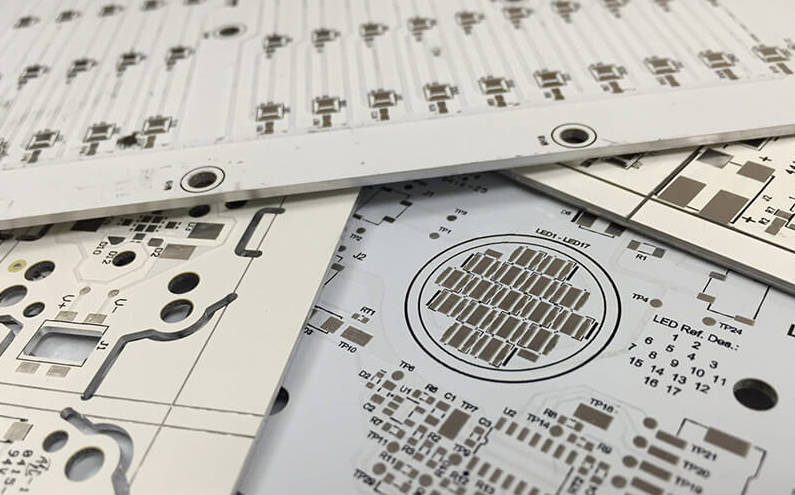
An Aluminum PCB is a type of Metal Core Printed Circuit Board (MCPCB) that uses an aluminum alloy as its base material instead of the traditional FR-4 fiberglass. This fundamental change in structure is specifically designed to address one major challenge in modern electronics: heat management. While it functions to connect components electrically like any PCB, its primary purpose is to efficiently transfer thermal energy away from critical components and dissipate it into the surrounding environment.
Deconstructing the Layers: The Key to Superior Performance
The structure of a typical single-sided aluminum PCB is elegantly simple yet highly effective. It consists of three primary layers:
- Aluminum Base Layer: This is the thickest layer and forms the board’s foundation. It provides mechanical rigidity and, most importantly, serves as the heat sink.
- Dielectric (Insulating) Layer: A very thin layer of thermally conductive but electrically insulating material is sandwiched between the aluminum base and the copper circuit. This layer is critical; it must effectively transfer heat while preventing any electrical short to the metal base. Its thermal performance is a key specification for aluminum PCBs.
- Copper Circuit Layer: This is the top layer of copper foil (typically 1-4 oz.) which is etched to form the desired circuit pattern, just like on a traditional PCB.
This layered construction creates a direct, highly efficient thermal path from the heat-generating components, through the thin dielectric, and into the aluminum base. This is a stark contrast to FR-4, where heat is trapped within the poorly conductive fiberglass and must be managed with external heat sinks or other complex cooling solutions.
Head-to-Head Comparison: Aluminum PCB vs. FR-4
Choosing between an Aluminum PCB and a traditional FR-4 board requires a clear understanding of their respective strengths and weaknesses. The decision typically hinges on the thermal, mechanical, and cost requirements of your specific project. Below is a detailed comparison across several key performance metrics.
| Feature | Aluminum PCB (MCPCB) | Traditional FR-4 PCB |
|---|---|---|
| Thermal Conductivity | Excellent (Typically 1-9 W/mK for the dielectric) | Poor (Typically 0.3-0.5 W/mK) |
| Durability & Strength | Very High; resistant to breakage and thermal shock | Good; can crack or fracture under high stress |
| Initial Cost | Higher | Lower |
| Weight | Heavier due to metal core | Lighter |
| Design Complexity | Typically limited to single or double-sided designs | Supports complex multi-layer designs (30+ layers) |
| Primary Application | High-power LEDs, power supplies, motor drivers | General-purpose electronics, microcontrollers, IoT |
Thermal Management: The Deciding Factor
This is the most significant difference. The thermal conductivity of an aluminum PCB’s dielectric layer is 5 to 10 times greater than that of FR-4. This allows heat to be transferred away from components like high-power LEDs or MOSFETs with incredible efficiency. On an FR-4 board, this heat remains localized, causing component temperatures to rise, which can reduce performance, shorten lifespan, and lead to catastrophic failure. An aluminum board acts as an integrated heat sink, often eliminating the need for bulky, expensive external heat sinks and simplifying the overall product design.
Durability and Mechanical Stability
Aluminum is a far more robust material than FR-4. Aluminum PCBs are less susceptible to breakage from physical shock or mishandling during assembly and in the field. They also exhibit superior dimensional stability. When subjected to thermal cycling (repeated heating and cooling), an FR-4 board can expand, contract, and warp. An aluminum board, with its metal core, remains much more stable, reducing stress on solder joints and components, which is particularly important for products deployed in harsh environments.
Manufacturing Complexity and Design Constraints
Here, FR-4 has a distinct advantage. The manufacturing process for FR-4 is highly refined, allowing for incredibly complex, multi-layer designs with fine traces and spaces. Creating multi-layer aluminum PCBs is significantly more complex and expensive due to the challenge of insulating the conductive metal layers from each other. Consequently, most aluminum PCBs are single-sided. This design constraint means they are not suitable for circuits with high component density or complex routing requirements, such as a computer motherboard.
The Critical Question of Cost: Is an Aluminum PCB Worth the Investment?
At first glance, the higher price tag of an aluminum PCB can be a deterrent. The raw materials—specifically the aluminum base and the specialized thermally conductive dielectric—are more expensive than standard FR-4. The manufacturing process also requires different handling and tooling. However, evaluating the cost solely on the price of the bare board is a common mistake that overlooks the broader financial picture.
Analyzing the Initial Outlay
Yes, the unit price for an aluminum board will almost always be higher than an equivalent FR-4 board. This cost difference is most pronounced for small-scale prototypes and becomes more competitive at higher production volumes. Factors influencing this cost include the thickness of the aluminum, the specific type and performance of the dielectric material, and the thickness of the copper layer. For projects where thermal performance is non-negotiable, this initial outlay is simply a required engineering cost.
Total Cost of Ownership (TCO) and Long-Term Value
The true value of an aluminum PCB emerges when you consider the Total Cost of Ownership. By integrating the heat sink directly into the PCB, you can eliminate the cost of separate components like large aluminum heat sinks, thermal interface materials (pads or grease), clips, screws, and the associated labor costs for assembly. This component and assembly consolidation can often offset, or even surpass, the higher initial cost of the MCPCB itself. Furthermore, the superior thermal management leads to a more reliable end product with a longer lifespan, reducing warranty claims, service calls, and damage to your brand’s reputation.
Which PCB is Right for Your Application?
The choice is not about which PCB technology is “better” in a vacuum, but which is the optimal solution for your specific application’s demands. Matching the PCB substrate to the project’s requirements is a critical design decision that impacts performance, reliability, and budget.
When to Choose an Aluminum PCB: High-Power Scenarios
An aluminum PCB is the clear and often only choice when your design involves components that generate significant heat. If your answer to “Does my circuit generate a lot of waste heat?” is yes, you should strongly consider an MCPCB. Key applications include:
- LED Lighting: High-brightness LEDs for streetlights, stadium lighting, automotive headlights, and horticultural grow lights.
- Power Electronics: Power supplies, AC/DC converters, inverters, and voltage regulators.
- Motor Control: Industrial motor drivers and controllers for robotics and automation.
- Automotive Electronics: Powertrain and engine control units (ECUs) where components run hot.
When a Traditional FR-4 PCB is the Smart Choice: Versatility and Cost-Effectiveness
For the vast majority of electronic applications where thermal loads are minimal to moderate, a traditional FR-4 PCB remains the undisputed champion. Its low cost and design flexibility make it the default choice. Use an FR-4 board for:
- Low-Power Digital and Analog Circuits: Microcontroller boards, sensor modules, and IoT devices.
- Consumer Electronics: Smartphones, laptops, televisions, and home audio systems.
- Complex, High-Density Designs: Computer motherboards, networking equipment, and server backplanes that require many layers.
- Prototyping: The low cost and fast availability make FR-4 perfect for iterating on designs.
Conclusion: Making the Informed Choice for Your Project
The debate between Aluminum PCBs and traditional FR-4 PCBs is ultimately a matter of matching the right tool to the right job. FR-4 is the versatile, cost-effective standard for general-purpose electronics, prized for its design flexibility and low cost. Aluminum PCBs are a specialized solution, engineered specifically for superior thermal management, offering unmatched performance and reliability in high-power applications. By analyzing your project’s thermal output, durability requirements, and overall budget—including assembly and long-term reliability—you can confidently select the PCB technology that will ensure your product’s success.
Frequently Asked Questions (FAQ)
Can aluminum PCBs be double-sided?
Yes, double-sided aluminum PCBs exist, but they are more complex and costly to manufacture. They require a pre-drilled and filled aluminum core to maintain electrical insulation between the two sides, with a dielectric layer and copper circuit applied to both faces. They are typically used only when space is extremely tight and thermal performance is still paramount.
How does the weight of an aluminum PCB compare to FR-4?
Aluminum PCBs are significantly heavier than FR-4 boards of the same dimensions due to the density of aluminum versus fiberglass. This is a critical consideration for weight-sensitive applications such as aerospace or portable devices.
Are there other types of metal core PCBs?
Yes. While aluminum is the most common due to its excellent balance of cost and thermal performance, other metals are also used. Copper core PCBs offer even better thermal conductivity than aluminum but are heavier and more expensive. Steel-based PCBs are also available, offering lower cost and greater rigidity, but with poorer thermal performance than aluminum.
Aluminum PCB, Traditional PCB, FR-4 PCB, Metal Core PCB, MCPCB, Aluminum PCB vs FR-4, PCB thermal management, what is an aluminum PCB, aluminum PCB cost, benefits of aluminum PCB, high-power LED PCB