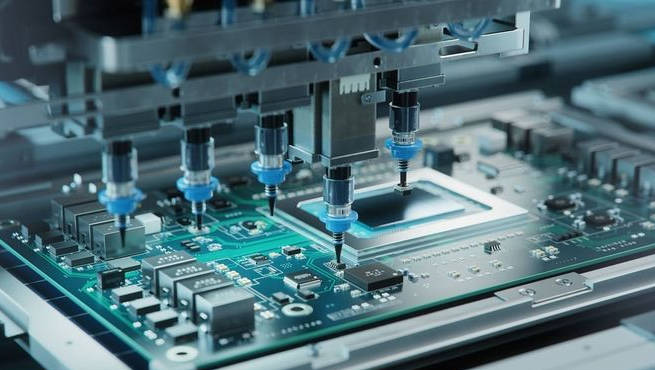
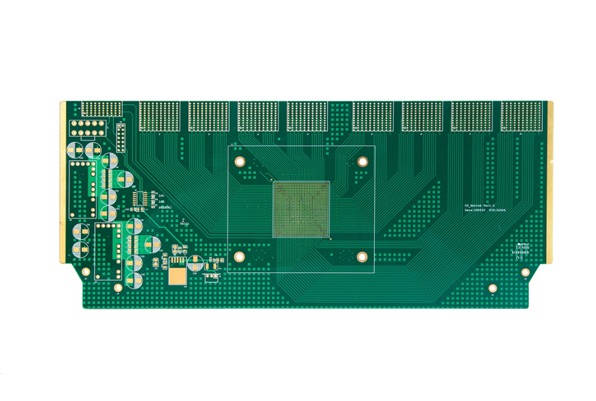
FR4 is the most popular material for Printed Circuit Boards (PCBs) due to its exceptional balance of cost-effectiveness, robust mechanical strength, reliable electrical insulation, and excellent thermal performance for a wide range of applications. This woven fiberglass and epoxy resin composite provides a highly manufacturable and durable foundation, making it the default, go-to substrate for everything from simple consumer electronics to complex industrial control systems.
Table of Contents
- What Exactly is FR4 Material? A Deeper Dive
- The Core Advantages of FR4 PCBs: A Comprehensive Breakdown
- How Does FR4 Compare to Other PCB Substrate Materials?
- When is FR4 the Right Choice (And When Should You Look Elsewhere)?
- Conclusion: The Enduring Legacy of FR4 in Electronics
What Exactly is FR4 Material? A Deeper Dive
Before we can truly appreciate the advantages of FR4, it’s crucial to understand what it is. The name “FR4” itself is a designation, not a trade name. It provides specific information about the material’s properties. This grade designation is set by NEMA (National Electrical Manufacturers Association) and is a composite material composed of two primary components.
The Composition: Woven Fiberglass and Epoxy Resin
At its core, FR4 is a laminate made from sheets of woven fiberglass cloth that are impregnated with a flame-retardant epoxy resin binder. Multiple layers of this pre-impregnated material, known as “prepreg,” are stacked together with layers of copper foil on the top and bottom. This entire stack is then subjected to immense pressure and heat. The process cures the epoxy resin, bonding the layers together into a rigid, solid, and flat sheet—the FR4 laminate that serves as the foundation for nearly every electronic circuit. This composite structure is the key to its blend of mechanical resilience and electrical stability.
Understanding the “FR” and the “4”
The name is descriptive. The “FR” stands for Flame Retardant, indicating that the material has self-extinguishing properties and will not sustain a flame once the source of fire is removed. This is a critical safety feature in all electronic devices. The material achieves this rating, specifically the UL94V-0 standard, through the addition of bromine to the epoxy resin formulation. The “4” simply designates the specific grade of the material within the NEMA LI 1-1998 standard, distinguishing it from other epoxy-glass composites like G10 (which is not flame retardant) or G11. Therefore, FR4 represents a specific, standardized, and safe material for building electronic circuits.
The Core Advantages of FR4 PCBs: A Comprehensive Breakdown
The widespread adoption of FR4 isn’t a coincidence; it’s a direct result of a powerful combination of benefits that make it the ideal choice for the vast majority of electronic design and manufacturing needs.
Unmatched Cost-Effectiveness: The Economic Powerhouse
Perhaps the most significant advantage of FR4 is its low cost. The raw materials—fiberglass cloth and epoxy resin—are widely available and relatively inexpensive to produce. Furthermore, decades of use have led to highly optimized, standardized, and efficient manufacturing processes around the globe. This economies of scale means that fabricating a PCB with FR4 is significantly cheaper than with almost any other substrate. For projects ranging from mass-produced consumer goods to prototypes, this economic advantage allows for innovation and accessibility that would be impossible with more exotic, expensive materials.
A Perfect Balance of Electrical Performance
For a massive spectrum of electronic applications, FR4’s electrical properties are more than sufficient. It is an excellent electrical insulator, preventing short circuits between copper layers. Its key electrical properties, the dielectric constant (Dk) and dissipation factor (Df), are stable and predictable up to frequencies in the lower GHz range. While not suited for extremely high-frequency RF applications where signal loss is paramount, FR4 provides a reliable and consistent performance for digital and analog circuits, microcontrollers, power supplies, and general-purpose electronics, making it a versatile workhorse.
Superior Mechanical Strength and Durability
The woven fiberglass reinforcement gives FR4 exceptional physical strength and rigidity. It boasts high dimensional stability, meaning it resists bending, warping, and shrinking under physical stress and during temperature fluctuations of the assembly process (like soldering). This structural integrity ensures that the PCB can withstand the rigors of manufacturing, assembly, and the long-term operational stresses of its end environment. It provides a solid platform for mounting heavy components and connectors without risk of fracture or damage.
Excellent Thermal Management for Most Applications
FR4 demonstrates good thermal performance, capable of withstanding the high temperatures required for both leaded and lead-free soldering processes. Its Glass Transition Temperature (Tg)—the temperature at which the material shifts from a rigid to a more pliable state—is typically between 130°C and 180°C for standard and high-Tg variants. This allows it to maintain its structural integrity during assembly. While not as conductive as metal-core PCBs, it effectively handles the thermal loads generated by most common electronic components, making it suitable for a vast array of designs.
High Flammability Resistance (UL94V-0)
As its name implies, a key feature of FR4 is its flame retardancy. It is rated UL94V-0, which is one of the highest ratings for plastics and laminates. This means that if exposed to a flame, it will self-extinguish within 10 seconds and is not prone to dripping flaming particles. This safety standard is a mandatory requirement for most consumer, commercial, and industrial electronic products, making FR4 a compliant and safe choice by default.
How Does FR4 Compare to Other PCB Substrate Materials?
Understanding FR4’s advantages becomes clearer when it is directly compared to its alternatives. Each alternative material was designed to excel where FR4 has limitations, but this specialization often comes with significant trade-offs in cost or manufacturability.
FR4 vs. High-Frequency Laminates (Rogers, Teflon)
Materials like Rogers or Teflon (PTFE) are engineered for high-frequency radio (RF) and microwave applications. Their primary advantage is a much lower dielectric constant (Dk) and dissipation factor (Df), which means significantly less signal loss at frequencies above 2-3 GHz. However, these materials are dramatically more expensive and can require specialized manufacturing processes. For applications like Wi-Fi routers, radar systems, or 5G antennas, Rogers is necessary. For everything else, FR4’s performance is sufficient at a fraction of the cost.
FR4 vs. Flexible Substrates (Polyimide)
Polyimide (PI) is the material of choice for flexible PCBs (Flex Circuits). Its key advantage is the ability to bend, twist, and fold, allowing for the creation of 3D electronic designs that fit into compact and uniquely shaped devices like cameras, wearables, and medical implants. While incredibly versatile, Polyimide is more costly and has a lower dimensional stability compared to rigid FR4. FR4 is the clear choice for applications that require a static, rigid structure.
FR4 vs. Metal Core PCBs (MCPCB)
Metal Core PCBs, typically with an aluminum base, are designed for one primary purpose: superior thermal dissipation. The metal core acts as a highly efficient heat sink, drawing heat away from components. This makes them essential for high-power LED lighting and power converter applications. However, they are generally limited to single-layer designs and are more expensive than FR4. For applications with moderate thermal loads, FR4 provides adequate performance without the added cost and design constraints of an MCPCB.
| Property | Standard FR4 | Rogers (RO4350B) | Polyimide (Flex) | Aluminum Core (MCPCB) |
|---|---|---|---|---|
| Primary Use | General Purpose, Digital, Analog | High-Frequency RF/Microwave | Flexible/Dynamic Applications | High-Power LEDs, Power Supplies |
| Relative Cost | Low ($) | Very High ($$$$) | High ($$$) | Medium ($$) |
| Mechanical Property | Rigid, Strong | Rigid, Brittle | Flexible | Rigid, Excellent Thermal Sink |
| Dielectric Constant (Dk) | ~4.5 | ~3.48 | ~3.4 | N/A (Thin Dielectric Layer) |
| Dissipation Factor (Df) | ~0.020 | ~0.0037 | ~0.002 | N/A |
When is FR4 the Right Choice (And When Should You Look Elsewhere)?
The decision of which PCB material to use boils down to a trade-off between performance requirements and budget. FR4 is the default, but knowing its limits is key to successful engineering.
Ideal Applications for FR4 Circuit Boards
FR4 is the optimal choice for an overwhelming majority of electronic products. This includes, but is not limited to: motherboards and computer peripherals, consumer electronics like televisions and audio equipment, industrial control systems, automotive electronics (non-RF), power supplies, and IoT devices. If your design operates below 1-2 GHz, does not require extreme flexibility, and does not generate an excessive amount of heat in a small area, FR4 is almost certainly the most practical and economical solution. It is also the perfect material for prototyping, even for high-frequency designs, as it allows for functional testing before committing to more expensive materials.
Key Indicators You Might Need an Alternative Material
You should consider moving away from FR4 if your project meets any of the following criteria:
- High-Frequency Operation: If your design operates consistently above 3 GHz, especially in applications sensitive to signal integrity and loss like antennas or high-speed communication backplanes, a material like Rogers is a necessity.
- Extreme Heat Dissipation: If you are designing with high-power LEDs or power transistors that concentrate significant thermal energy, an MCPCB will provide the thermal management needed to ensure reliability and longevity.
- Dynamic or Confined Spaces: If the circuit board must bend, fold, or fit into a non-planar space, a flexible substrate like Polyimide is the only viable option.
- Extreme Temperature Environments: For applications in aerospace or down-hole drilling that experience extreme operating temperatures, specialized high-temperature laminates or ceramic substrates may be required.
Conclusion: The Enduring Legacy of FR4 in Electronics
FR4’s dominance in the PCB industry is a testament to its incredible versatility and value. It occupies a “sweet spot” that no other material has managed to replicate, offering an unparalleled blend of affordability, manufacturability, and robust performance. It is the solid, reliable foundation upon which the modern electronic world is built. While specialized materials will always have their place for high-performance and niche applications, FR4 will continue to be the workhorse, empowering engineers and designers to bring innovative and accessible products to life for the foreseeable future.
FR4 PCB, FR4 material advantages, PCB substrate materials, why use FR4, FR4 vs Rogers, FR4 properties, circuit board material comparison, cost of FR4 PCB, FR4 laminate, high-Tg FR4, what is FR4 made of, advantages of FR4 PCBs over other materials