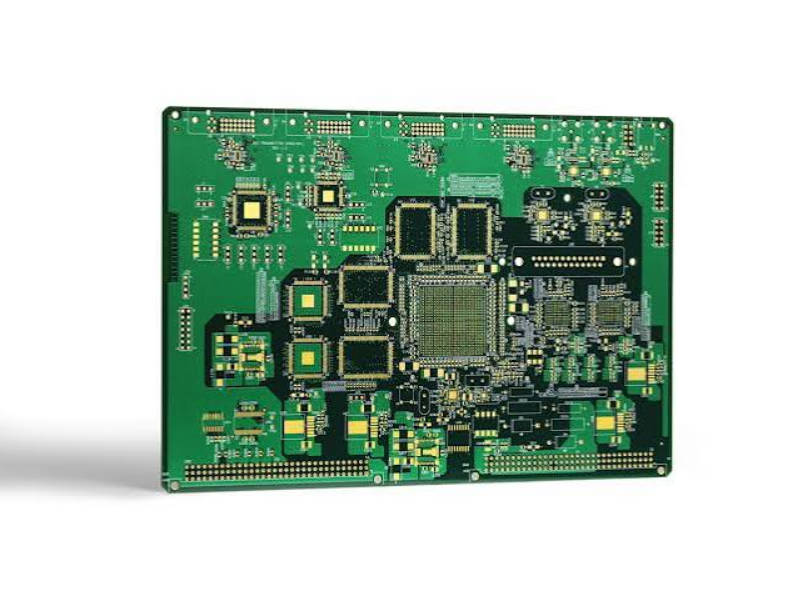
Medical wearable devices require electronics that are compact, lightweight and reliable enough to operate continuously in demanding environments. A medical rigid flex PCB helps engineers achieve these goals by combining the mechanical flexibility of flexible circuits with the component support and routing capability of rigid boards.
Rigid-flex PCB technology enables medical wearables to reduce size, eliminate unnecessary connectors and improve reliability in applications where traditional rigid PCBs cannot meet mechanical requirements.
Unlike conventional rigid circuit boards, rigid-flex PCBs can bend, fold and adapt to complex device shapes. This makes them suitable for wearable medical products where electronics must follow the human body’s movement while maintaining stable electrical performance.
However, designing a reliable medical wearable PCB requires more than simply reducing board size. Engineers must carefully consider:
- mechanical stress during movement;
- long-term reliability;
- signal integrity;
- material selection;
- manufacturing consistency;
- assembly requirements.
This article explains how rigid-flex PCB technology supports medical wearable development and what design factors should be considered before production.
Why Medical Wearables Need Rigid-Flex PCB Technology
Medical wearable devices are becoming increasingly compact while requiring more functions.
Modern wearable healthcare products may need to integrate:
- sensors;
- wireless communication modules;
- power management circuits;
- processors;
- monitoring components;
- user interfaces.
Traditional rigid PCBs often create limitations because they require:
- more physical space;
- additional connectors;
- larger mechanical structures;
- fixed installation positions.
Rigid-flex PCB designs solve these challenges by combining rigid and flexible sections into one integrated circuit structure.
Rigid-Flex PCB Advantages for Medical Wearables
| Requirement | Rigid-Flex PCB Advantage |
| Compact size | Allows 3D packaging and folded structures |
| Lightweight design | Reduces connectors and mechanical parts |
| Mechanical movement | Supports bending and curved installation |
| Reliability | Reduces connection points |
| Space optimization | Improves internal component arrangement |
| Design flexibility | Fits irregular product shapes |
For wearable medical products, the PCB is not only an electrical component. It is also part of the mechanical structure.
How Rigid-Flex PCB Enables Miniaturization
Miniaturization is one of the biggest challenges in wearable medical electronics.
Reducing device size requires engineers to optimize every internal component.
Rigid-flex PCB technology supports miniaturization in several ways.
1. Eliminating Board-to-Board Connectors
Traditional designs often require:
- rigid PCB sections;
- cable connections;
- connectors between modules.
These components increase:
- assembly complexity;
- device thickness;
- failure points.
A rigid-flex structure integrates multiple sections into one circuit assembly.
This reduces:
- connector count;
- wiring complexity;
- internal volume requirements.
Reducing mechanical connections is one of the main reasons rigid-flex PCBs improve wearable device reliability.
2. Supporting Three-Dimensional Packaging
Wearable products rarely have flat internal spaces.
Examples include:
- curved housings;
- wrist-mounted devices;
- skin-contact monitoring products;
- compact medical sensors.
Rigid-flex PCBs allow designers to fold or position circuit sections around mechanical structures.
This creates more freedom for:
- battery placement;
- sensor positioning;
- antenna integration;
- component arrangement.
3. Improving Internal Space Utilization
A rigid-flex PCB can combine:
- rigid areas for component mounting;
- flexible sections for interconnection.
This allows engineers to place components closer together while maintaining mechanical flexibility.
Example Design Distribution
| PCB Area | Function |
| Rigid section | Processor, ICs and major components |
| Flexible section | Connection between modules |
| Folded area | Space-saving installation path |
This approach is particularly valuable when device dimensions are limited.
Reliability Challenges in Medical Wearable PCB Design
Although rigid-flex PCBs provide major advantages, medical applications require strict reliability considerations.
Wearable devices may experience:
- repeated bending;
- temperature changes;
- moisture exposure;
- mechanical vibration;
- long operating periods.
The PCB must maintain electrical performance throughout the product lifecycle.
Mechanical Reliability Considerations
The flexible section is usually the most sensitive area.
During movement, copper traces experience repeated stress.
Potential failure risks include:
- copper fatigue;
- trace cracking;
- layer separation;
- coverlay damage;
- adhesive fatigue.
Key Mechanical Design Factors
| Factor | Impact on Reliability |
| Bend radius | Smaller radius increases mechanical stress |
| Copper thickness | Thicker copper increases stiffness |
| Layer count | More layers increase rigidity |
| Trace direction | Incorrect routing increases fatigue |
| Material selection | Affects flexibility and durability |
A successful medical wearable PCB design requires mechanical planning from the beginning.
Trace Routing Rules for Medical Wearable Rigid-Flex PCB
Trace routing inside flexible areas requires different considerations compared with rigid PCB design.
Route Traces Along the Bending Direction
When traces cross the bending direction repeatedly, mechanical stress concentrates on the copper.
Better practices include:
- routing traces parallel to bending direction;
- avoiding sharp corners;
- maintaining consistent trace width;
- reducing unnecessary copper features.
Trace Direction Comparison
| Routing Method | Reliability Effect |
| Parallel to bend direction | Lower mechanical stress |
| Perpendicular crossing | Higher fatigue risk |
| Rounded routing | Better stress distribution |
| Sharp-angle routing | Creates stress concentration |
For medical wearables that require repeated movement, trace routing is directly connected with product lifetime.
Material Selection for Medical Rigid-Flex PCB
Material selection influences both electrical performance and mechanical durability.
Important considerations include:
- flexible dielectric properties;
- copper foil type;
- adhesive characteristics;
- coverlay material;
- thermal performance.
Material Consideration Table
| Material Factor | Design Impact |
| Flexible dielectric | Controls bending behavior |
| Copper foil | Influences fatigue resistance |
| Coverlay | Protects circuits and affects flexibility |
| Adhesive system | Affects layer bonding reliability |
| Surface finish | Influences assembly performance |
The selected materials should match the expected mechanical movement and environmental conditions.
Coverlay Design in Medical Wearable PCBs
Coverlay protects exposed copper traces in flexible areas.
However, incorrect coverlay design can create additional stress.
Important design considerations include:
- coverlay thickness;
- opening position;
- transition area;
- adhesive coverage.
Coverlay Design Risks
| Problem | Possible Result |
| Excessive coverlay thickness | Reduced flexibility |
| Sharp coverlay transition | Stress concentration |
| Poor adhesive control | Layer separation risk |
| Incorrect opening design | Copper exposure issues |
The coverlay should protect the circuit without restricting natural bending movement.
Rigid-Flex PCB vs Traditional PCB for Medical Wearables
| Feature | Traditional Rigid PCB | Rigid-Flex PCB |
| Mechanical flexibility | Limited | High |
| 3D installation | Difficult | Easier |
| Connector requirement | Higher | Lower |
| Space utilization | Moderate | Excellent |
| Wearable suitability | Limited | Strong |
| Design complexity | Lower | Higher |
Traditional rigid PCBs remain suitable for stationary medical equipment.
However, wearable medical devices often require the mechanical flexibility provided by rigid-flex technology.
Common Rigid-Flex PCB Design Mistakes in Medical Wearables
Mistake 1: Prioritizing Size Reduction Over Reliability
Making a PCB smaller without considering mechanical stress may create long-term failures.
Miniaturization must be balanced with:
- bend radius;
- material capability;
- reliability testing.
Mistake 2: Placing Components Near Flex Areas
Components and solder joints increase rigidity.
They should generally be located in rigid sections whenever possible.
Mistake 3: Ignoring Manufacturing Requirements
A theoretical design may not always translate into stable production.
Manufacturing review should include:
- stackup feasibility;
- layer alignment;
- flex material selection;
- assembly requirements.
Mistake 4: Using Standard PCB Rules for Flex Sections
Flexible areas require different design considerations.
Engineers should separately evaluate:
- trace geometry;
- copper thickness;
- spacing;
- bending conditions.
How to Select a Rigid-Flex PCB Manufacturer for Medical Applications
Medical wearable products require consistent manufacturing quality.
When evaluating suppliers, consider:
| Capability | Importance |
| Rigid-flex PCB experience | Understands complex structures |
| Stackup design support | Reduces mechanical risks |
| Process control | Improves consistency |
| Prototype capability | Supports design validation |
| Quality management | Important for medical applications |
A suitable manufacturer should participate early during the design process.
Key information to provide includes:
- product size;
- bending requirements;
- operating environment;
- layer count;
- component layout;
- reliability expectations.
Mars-PCB provides Rigid-Flex PCB manufacturing solutions for applications requiring compact designs and reliable flexible interconnect structures.
Future Trends of Rigid-Flex PCB in Medical Wearables
As medical wearables become smaller and more intelligent, PCB technology will continue moving toward:
- higher integration;
- thinner structures;
- improved reliability;
- more complex mechanical designs.
Future wearable devices may require PCBs that combine:
- flexible routing;
- compact packaging;
- advanced sensor integration;
- wireless connectivity.
Rigid-flex PCB technology provides an important foundation for these next-generation medical electronics.
FAQ
What is a medical rigid flex PCB?
A medical rigid-flex PCB combines rigid circuit sections and flexible circuits into one structure, allowing wearable medical devices to achieve compact size and mechanical flexibility.
Why are rigid-flex PCBs used in wearable medical devices?
Rigid-flex PCBs reduce connectors, save internal space and support curved or moving device structures, making them suitable for compact medical wearables.
How does rigid-flex PCB improve medical device reliability?
By reducing cable connections and mechanical interfaces, rigid-flex PCBs can lower potential failure points in wearable electronics.
What design factors affect rigid-flex PCB reliability?
Important factors include bend radius, copper thickness, trace direction, coverlay design, material selection and manufacturing control.
Can rigid-flex PCBs support miniaturized medical devices?
Yes. Rigid-flex structures allow three-dimensional packaging and efficient use of limited internal space.
How should traces be routed in a rigid-flex wearable PCB?
Traces should generally follow the bending direction, avoid sharp corners and minimize stress concentration areas.
What should engineers consider when selecting a rigid-flex PCB supplier?
Engineers should evaluate rigid-flex experience, manufacturing capability, stackup support, quality control and prototype validation capability.